Table of contents
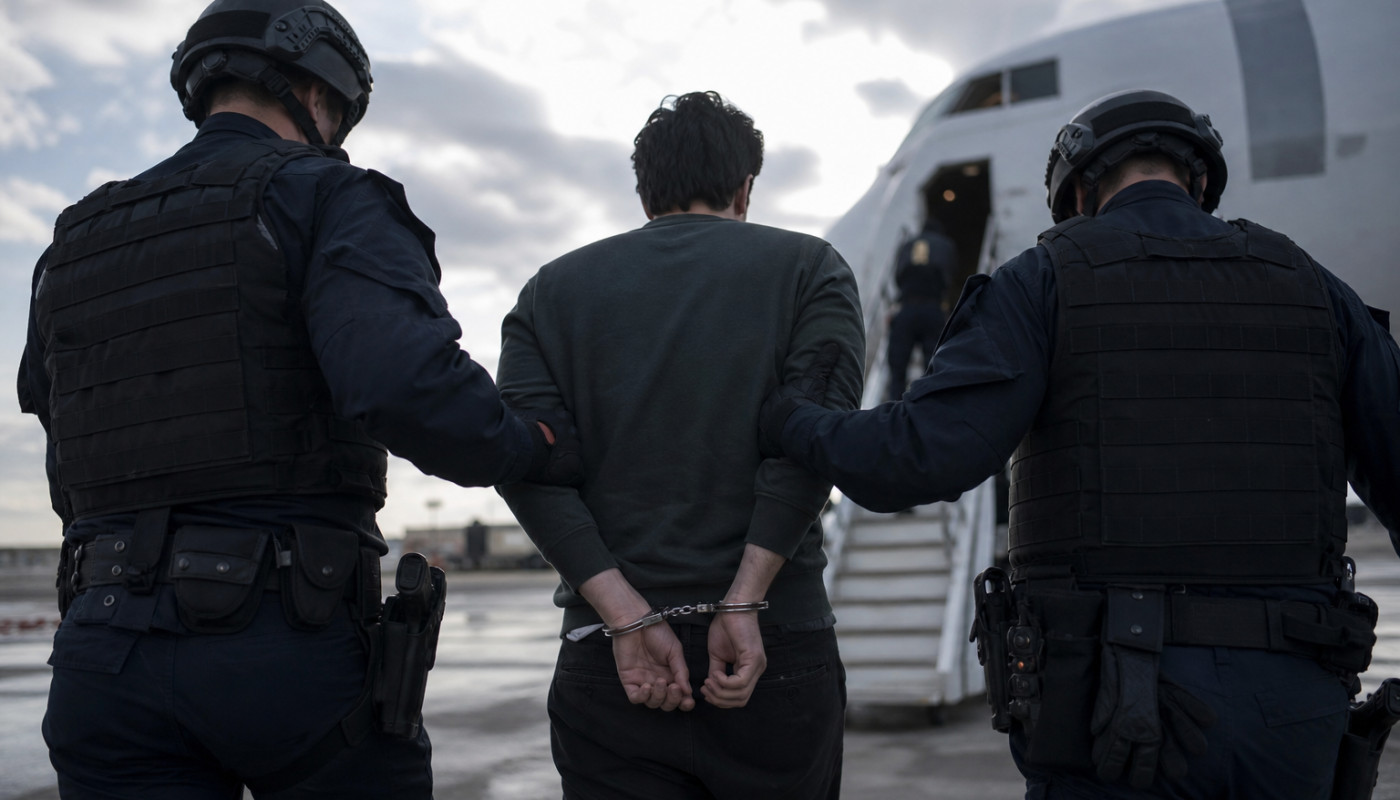
Across Europe and North America, extradition has quietly shifted from a rarely noticed legal procedure into a frontline battleground where counterterrorism, cybercrime and geopolitical pressure collide with individual rights. The headlines often focus on a single suspect and a single plane ticket, yet the real story is structural: treaties signed decades ago are now being used at industrial pace, and courts are asked to decide, fast, whether a person will face a fair trial, humane detention and proportionate punishment abroad.
Extradition is speeding up, courts are struggling
How fast can justice move before it stops feeling like justice? That question is no longer abstract, because extradition requests have become routine tools of cross-border policing, and legal safeguards designed for slower, simpler cases are under strain. In Europe, the European Arrest Warrant turned surrender between member states into a largely judicial process, cutting political discretion, and compressing timelines; in practice, it created a system where a person can be transferred in weeks, even when the underlying allegations, evidence and detention conditions remain contested.
Data points underline the acceleration. According to the European Commission’s own reporting on the European Arrest Warrant, tens of thousands of warrants circulate each year across the EU, and thousands of surrenders are executed annually, with average timeframes measured in days when the person consents and in a few months when they do not. Speed, however, is not neutral, because defence teams need time to obtain prison reports, medical records, expert evidence and translations, and judges need time to test assurances offered by requesting states. When the system is optimised for velocity, the margin for error narrows sharply, and the consequences, once the person is transferred, are often irreversible.
Outside the EU, the same pressure appears under a different label: “operational cooperation”. Mutual legal assistance, Interpol diffusion notices and bilateral treaties have made it easier for states to locate and detain suspects abroad. Yet the legal standards remain uneven, and courts often face asymmetric information, because prosecutors and requesting authorities arrive with prepared dossiers, while defence teams scramble to investigate conditions thousands of miles away. For readers trying to understand the stakes, it is worth remembering a simple fact: extradition is not a finding of guilt, but it can feel like punishment, especially when pre-extradition detention stretches for months, employment collapses and families are separated.
That is why specialised legal scrutiny matters. In complex cross-border cases, defendants and families often turn to focused resources such as https://bluenoticelawyer.com/ to better understand procedure, timelines and the kinds of evidence that can make a difference, from medical assessments to prison-condition documentation. The point is not to slow justice for its own sake, but to ensure that speed does not replace proof, and that cooperation does not erase the courtroom’s duty to examine risk.
Fair trial fears drive the toughest decisions
One wrong transfer can destroy a life. That is the uncomfortable backdrop to the most contentious extradition fights, because the central legal question is rarely “did it happen?”, it is “will the person’s rights survive the transfer?”. Courts are asked to evaluate the risk of an unfair trial, political persecution or discriminatory prosecution, and they must do it using evidence that can be partial, contested or hard to verify. In liberal democracies, judges are trained to trust legal systems that look familiar; in the age of global security, they increasingly face cases where trust cannot be assumed.
Human rights law, in theory, sets a high bar. In Europe, Article 3 of the European Convention on Human Rights forbids torture and inhuman or degrading treatment, and Article 6 guarantees a fair trial. The European Court of Human Rights has repeatedly ruled that states must not extradite or deport someone where there is a real risk of ill-treatment, even if the person is accused of serious crimes. That principle has shaped countless decisions on transfers to states with documented prison abuse, and it has forced courts to interrogate diplomatic assurances, a controversial practice in which requesting countries promise, in writing, to treat the person humanely.
The problem is practical and deeply political: assurances are easy to issue, harder to monitor and hardest to enforce. Monitoring mechanisms vary widely, and access to prisons can be limited, especially in high-security regimes or in cases tied to national security. Human rights groups, including Amnesty International and Human Rights Watch, have repeatedly criticised reliance on assurances where systemic abuse is documented, arguing that a promise cannot neutralise a structural risk. Judges, meanwhile, have to decide with the record before them, and the record is often built under time pressure.
Fair-trial risk is equally complex. Concerns can include the independence of the judiciary, the use of evidence obtained under coercion, restrictions on access to lawyers, closed proceedings, or the criminalisation of political speech under broad “security” statutes. Even within allied states, the friction is real, because definitions of terrorism, espionage, hacking or extremism have widened, and prosecution strategies increasingly rely on intelligence material that may be difficult for defence teams to test in open court. Extradition law, in other words, has become a proxy forum for debating the rule of law abroad, and that is an uncomfortable role for domestic courts, but a necessary one.
Prison conditions and health: the hidden fault line
A prison cell can decide the case. That sounds like an exaggeration until you look at how many extradition battles hinge not on guilt or innocence, but on conditions of detention and the medical vulnerability of the person sought. In recent years, European courts have repeatedly confronted evidence of overcrowding, poor sanitation, violence and lack of healthcare in some prison systems, and those conditions are not only moral issues; they are legal triggers, because a real risk of inhuman treatment can bar surrender.
European case law has treated prison overcrowding as a serious human-rights concern, particularly when personal space falls below minimum thresholds or when poor conditions are combined with lack of outdoor time, inadequate ventilation and limited access to medical care. The European Court of Human Rights has developed a detailed approach to assessing detention conditions, and domestic courts increasingly request precise, facility-specific information: cell size, occupancy, time out of cell, access to showers, and the ability to treat chronic illness. When requesting states respond with generic statements, judges may refuse extradition, not as a political gesture, but because vague assurances cannot rebut detailed evidence of risk.
Health has become a decisive factor, especially after the pandemic exposed how fragile prison healthcare can be. Courts now see more cases involving severe mental illness, suicide risk, neurodevelopmental conditions, or complex physical disabilities. For these defendants, the question is not simply whether a prison has a doctor on paper, it is whether treatment is realistically accessible, continuous and equivalent to what is medically required. In practice, that means expert reports, psychiatric assessments and detailed treatment plans, and it also means confronting a blunt reality: high-security detention, isolation measures and long pre-trial periods can themselves worsen mental health, turning extradition into a medically foreseeable crisis.
This is where the system’s incentives can distort outcomes. Prosecutors may argue that medical concerns can be handled after transfer, and requesting states may highlight formal healthcare structures, yet defence teams point to waiting lists, medication shortages and barriers to specialist care. Judges are left to predict the future based on imperfect information. When courts do block extradition on health grounds, critics accuse them of creating “loopholes”; supporters respond that human rights are not loopholes, and that the prohibition on inhuman treatment is absolute, regardless of the allegation.
For the public, the challenge is empathy without naïveté. Serious crime demands accountability, and cross-border fugitives should not be able to disappear behind borders, yet accountability cannot require avoidable suffering, and a justice system that ignores detention reality risks becoming complicit in harm. Extradition is often described as a technical process; prison and health arguments reveal that it is also a profoundly human one.
Security politics is reshaping the legal balance
National security rarely stays inside its lane. Over the past two decades, counterterrorism frameworks have expanded, cybercrime has become a strategic priority and geopolitical rivalry has intensified, and extradition sits at the intersection of all three. That shift changes how cases are argued and how the public reads them. When a person is labelled a terrorist, a hacker or an agent, patience for procedural nuance collapses, and pressure rises on courts to show cooperation, even when the rights questions are unresolved.
The legal landscape reflects that pressure. Many jurisdictions have broadened extraterritorial reach for offences involving digital systems, sanctions evasion, organised crime or terrorism financing, meaning a person can face extradition for conduct that occurred largely online, across multiple countries, with victims and servers scattered across continents. That creates jurisdictional competition: more than one state may seek the same person, and decisions about priority can become diplomatic as much as legal. Meanwhile, evidence in such cases can be heavily technical, and contested facts can be buried in digital forensics that lay audiences, and sometimes even courts, struggle to parse quickly.
Politically, extradition can become symbolic. Governments sell it as proof of resolve, especially after attacks or major cyber incidents, and a successful transfer can be framed as a triumph of alliance solidarity. Yet symbolism can obscure the core rule-of-law question: does cooperation remain conditional on rights, or does rights review become a box-ticking exercise? The more extradition is treated as an instrument of strategic alignment, the more tempting it becomes to downplay prison risks, fair-trial concerns and proportionality, particularly in cases involving potential “national security” exceptions to disclosure, secrecy around intelligence sources and closed hearings.
There is also the risk of politicised requests, especially when authoritarian states pursue dissidents, journalists or business figures under criminal pretexts. Democracies have tools to refuse such requests, but the line is not always obvious, and it becomes harder to draw in an environment where “security” language is ubiquitous. Courts are then forced into a delicate role: recognising genuine transnational threats, while resisting the normalisation of exceptional measures. The future of human rights in extradition will depend less on treaty text than on whether judges continue to demand concrete evidence, detailed assurances and enforceable safeguards, even when headlines and geopolitics push the other way.
Planning an extradition defence, before it is too late
Start early, document everything. Anyone facing a cross-border arrest risk, or families trying to respond to a sudden detention, should think in practical terms, because extradition timelines can move quickly, and delays can cost options. Budgeting matters, as specialist representation, expert reports, translators and country-condition evidence can be expensive, and early planning often reduces emergency costs later. Where available, legal aid can help, but eligibility rules vary, and complex international cases may still require additional funding.
Similar

Children And The Courtroom: The Hidden Dynamics Of Parental Disputes

Unraveling the Enigma of Human Consciousness
